Train Travel in Denmark
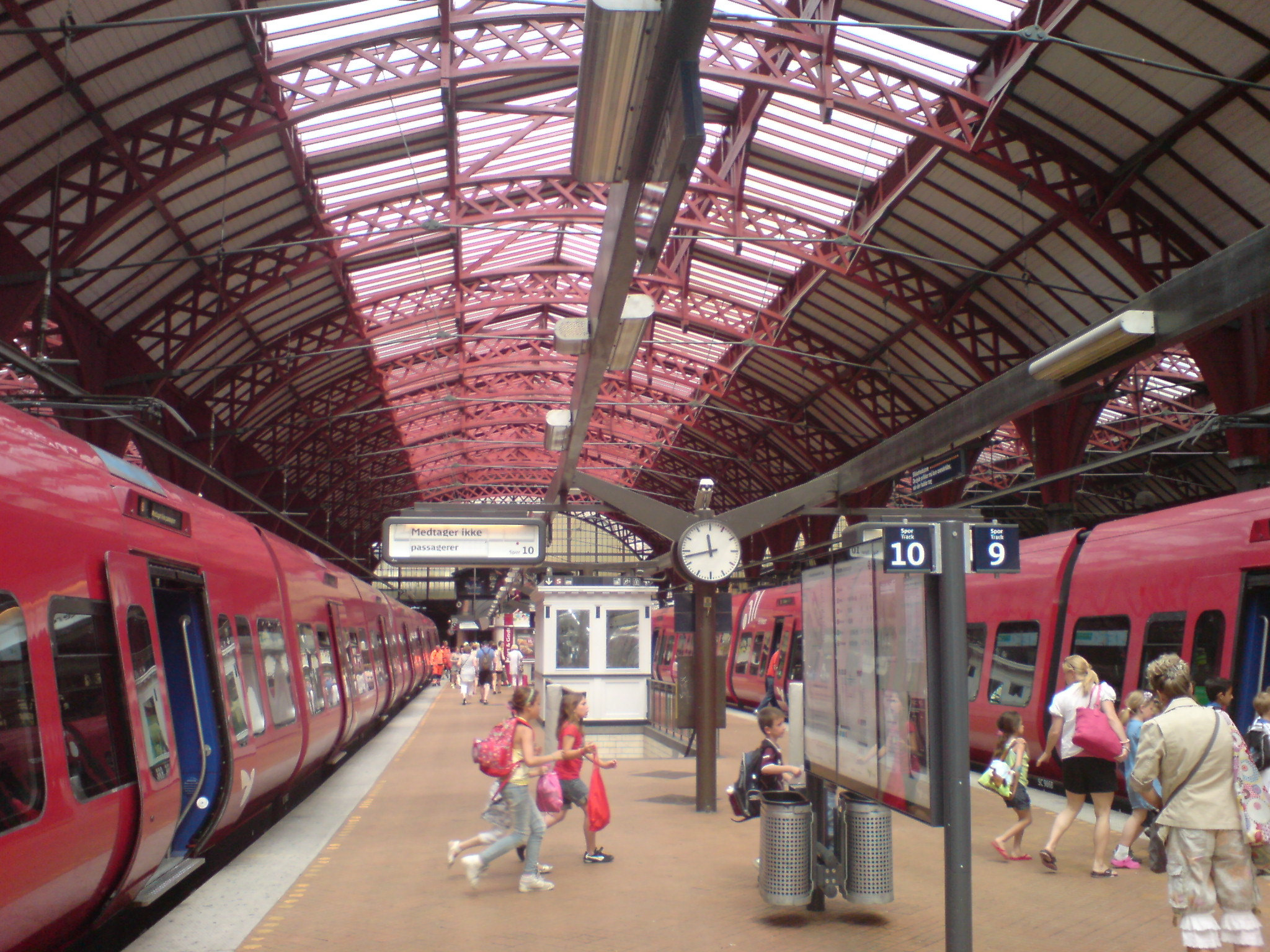
Mastering train travel in Denmark is not that difficult once you understand how the system works. In order to do that, you need to understand how to read the maps, zones and timetables.
A few explanations and examples should help you become proficient in no time! A little bit of information first.
The infastructure in Denmark is top-notch and the government is constantly trying to encourage more and more people to leave their cars at home and use "offentlig" (public) transport or their bicycles. Which is working well.
For a visitor to Denmark, train travel may be a new experience, especially if you arecoming from the US, where the car is still KING. You will soon find out that the experience is quite painless, fun and very relaxing.
There are two major types of train travel - the local trains and the regional trains. I am not going to cover international train travel, but going to concentrate on train travel inside Denmark. If you are looking for train fares and schedules to Denmark from other European countries, check out Eurail or Rail Europe. The train system is much more concentrated in Sjaelland, than it is in other parts of Denmark. For that reason I will discuss the DSB S-Tog system first, which is the one most visitors to Denmark will be exposed to and use.
Train travel in Denmark may seem a bit complicated, but it really is very simple when you understand the basics. Take it one step at a time and it will all come together.
Let's start with the basics.
Train Travel on the S-Tog
 s tog sign
The Copenhagen train system is known as the S-Tog. Most of the trains on the system now are new and very sleek red carriages. There are still a few of the older type of carriages, but the majority are very modern - making train travel fun and enjoyable!
Stations are marked with large red sign with a white S. (See above)
Boarding a train is simple. Trains stop at all train stops on their routes. That does not mean that every train going through your station will stop. If the train is scheduled to stop, it will – you don’t need to flag it down or push a button on the train for it to stop.
 train doors
Always stand behind the yellow line by the edge of the platform. This is for your safety; don’t fool around with this, you will lose out. It hurts getting hit by a train.
When the train comes into the station, you will hear a beeping sound when the doors have been unlocked. You can now open the door to board. On the new trains you will see a round circle with blinking green lights. Push that button and the doors open automatically. When the train is ready to leave, the doors also close automatically. On the older trains, the doors have lever handles. They are opened by pushing the vertical door handles sideways.
 seating on a s train
If you're not sure how to open the doors, just watch other people boarding. You will soon learn how simple it is.
On the new trains there are glass doors connecting each compartment. These doors are activated by pushing the blue dots on the door frame or waving your hand right in front of the door. There is an electric eye above the door that opens it.
There is no reserved seating, but be aware of which way you are sitting - some seats will face forward and some face backwards. Some people do not like riding backwards. If you do not like riding backwards – hey, you can always change seats.
A few things to remember
|
|
During 2010, there were over 3.7 million trips taken without a ticket, which is well over 50 million kroner lost in revenue.
This is one of the reasons ticket prices keep going up. If people are not paying, than others who do will have to pay more. Do not be part of this illegal activity and report those who do. It will save you money.
Rules for bringing your bike on train
When traveling on the train, you must put your bicycle in the carriage that has the bicycle symbol on it. This is called the flex space. If you follow these rules you should be okay.
- If there is no room for your bicycle in flex space, you must try to place you in a different flexrum or wait for the next train.
- Your bike may only be in the flex space and should be placed behind the red line.
- Do not block the doors to the compartment, or entrance doors to flex space with your bike.
- The front and rear door marked with the bicycle sign are to be used for bicycles, baby carriages, wheelchairs.
- In flex space you need to make room for people with bikes prams and wheelchairs.
- Flex space is reserved for bicycles, prams and wheelchairs.
- It is not allowed to ride your bicycle on the platform. You can be fined for this.
The next steps to mastering train travel are
1. understand the various train travel routes
2. read time tables /schedules
or check out some of the other important pages below.
Other Transportation Information
Below is list of some of the other transportation related pages on FYI Denmark, so you choose which mode you wish to learn more about.
|
|
|
If you found this page helpful, please give a google+ and or a facebook like at the top of the screen, so others can also find this information. Thank you.
Please feel free to comment on this subject
Do you have a helpful tip or comment on this subject that you would like to share? Please leave comments below.

Quality facemasks are in high demand and hard to find. We have found these quality masks here for only 14kr. Going fast so get yours today! Click Here.
Recent Articles


-
Home Furnishing Shops in Denmark
Feb 16, 24 11:10 AM
 There are many home furnishing shops in Denmark, yet not all have physical stores nor are they well known. To find the best prices ind quality, check out some of these shops
 -
Useful Danish Phrases
Oct 07, 21 07:28 AM
 Learning a few useful danish phrases or words can go a long way to making your stay or visit in Denmark more enjoyable.
 -
Aarhus Attractions
Oct 07, 21 07:08 AM
The number of Aarhus attractions may not be as big as Copenhagen, but there is still alot to see and do in this Danish city.

SBI!