Tickets
When using any form of public transportation in Denmark tickets are necessary. This includes buses, trains, metro and harbor boats. The only exception are the free public bicycle, where you have to make a 20 kroner refundable deposit. (these bicycle services are no longer available. They have been replaced with rental bikes parked throughout the city. Learn more here.) If you use a public transport service without one, you will get fined and at present it stands at 1000kr for an infraction.
First, let's discuss where to get a ticket:
- They can be obtained from the main train stations at their ticket offices.
- At other stations you can get it at the kiosk during opening hours.
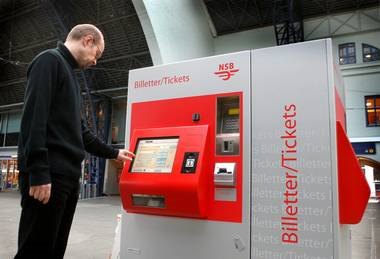
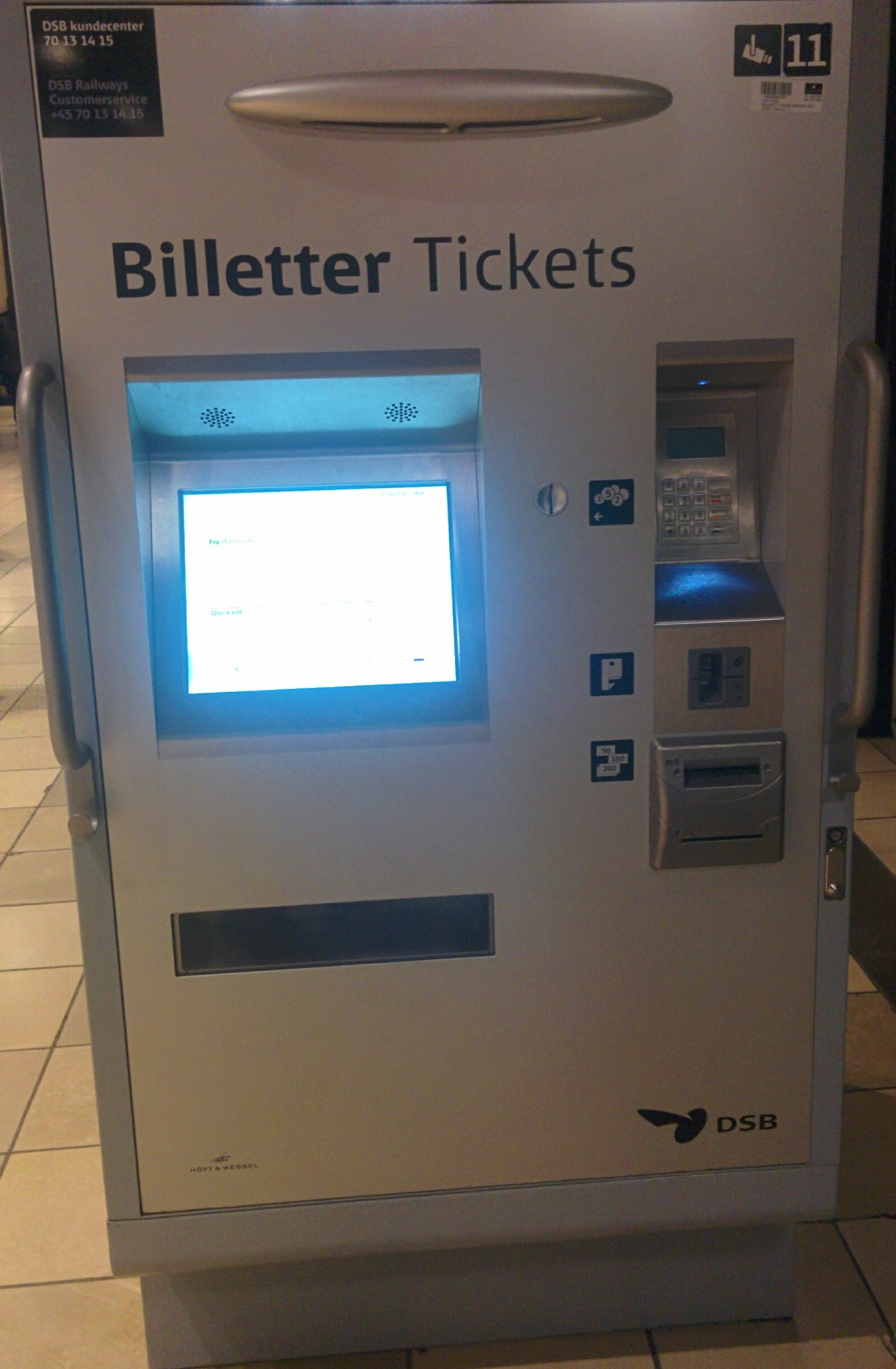
- Through automated machines located at most train stations. (see image above)
- You can buy them on the bus, if you have correct change. Many times drivers do not or will not give change. It is up to you to have the correct amount. You can usually get change, but not all bus chauffors will give change for large denomination bills.
- You can also order via your mobile phone, iPhone, iPod touch, iPad and Android 2.0 or higher using their apps..
- Finally there is the Rejsekort system, which still has some problems and I am not a fan of the system, but do use it. Have to. Learn how to use it properly in order not to get extra charges. Recommend tracking your charges online each day when first starting out so you can catch any mistakes and often get rejsekort to refund unfair charges.
Types of tickets
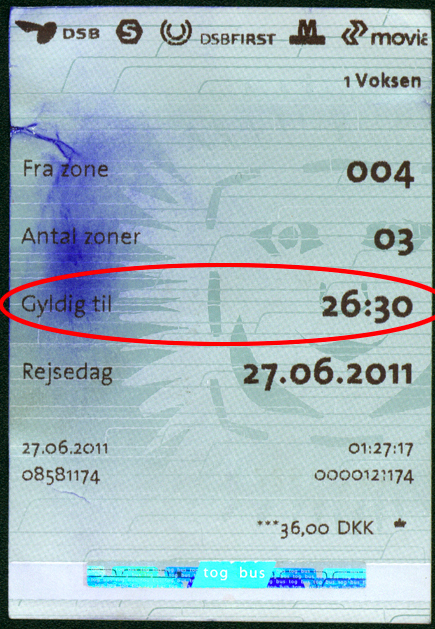 typical single ticket
There are three basic types:.
- Single trip
- Rejsekort (digital tickets)
- Passes, which are known as pendlere.
Single Trip: A single trip tckt is just that. One tckt bought for a specific trip and can only be used once on that specific journey. You can buy these from bus drivers, via vending machines, via electronic apps. You can also buy them at the train station office for other trips across Denmark and Europe, but I will be focusing on the S-Tog, bus and metro travel within the city.
Klippekort: This option was probably the most convenient for many people, but it has been removed as of Jan 15, 2024
How to use a ticket
Helpful Ticket Tips
- Always keep your tickets handy to show to the driver or inspector until you have finished your trip. If you use the rejsekort, the conductor will scan the kort and if you use a mobile ticket, have your phone available to show them your ticket.
- If you are traveling on a single ticket and you change buses, it is necessary to show the driver your ticket when you board, so he/she knows you have a valid ticket. Just hold it out, do not give it to him unless he asks. No need to buy another ticket when changing buses or trains as long as it falls within the time limit and allowed zones.
- Many inspectors now travel on trains and buses in everyday clothing. This has been done because many people try to avoid buying tickets, and uniforms made it easy for them to be on the lookout for inspectors. If they saw one, they'd get off the train. It's not so easy now. If someone does ask to see your ticket, just show it to them; do not give it to them. They just need to see it. If you do give someone your ticket, make sure he or she really is an inspector and not just someone trying to steal your ticket!
- When riding on a bus or city train, there are no reserved seats, so your ticket entitles you to sit where you wish. The 3 exceptions that I know are:
- If someone with a baby carriage boards a train or bus, you must move and allow them the standing space - usually in the middle of the bus or at each end of the carriages on trains. There is also a section on trains where bicycles can be put in little holders. You need to allow them to use those spaces for their bikes even if you are sitting on one of the seats.
- There are some places where there is seating for disabled or elderly people, and you need to leave those seats available. You can sit there, but if someone is need of those seats you must give them up. (It used to be common courtesy to give your seat to an elderly person or woman, but that is no longer the case. That does not mean you shouldn't do it, but it is not expected or done very often. Maybe we can change that!)
- Regional and intercity trains do not use the same tickets as the ones I have been discussing here. You need to buy them at the train station ticket office. They do offer reserved seats. If you're planning on traveling on those types of trains, reserve a seat. It costs just a bit more, but it's well worth it. You can also specify "quiet cars" where phones, music, talking, etec. is not allowed. Can be very nice on long trips where you wish to sleep or relax.
- Children under 12 can travel free with a paying adult.(Max 2 children per 1 adult.) If a child is under 12 and traveling alone, they must pay for a ticket.
- Anyone under 16 can travel on a child's ticket.
- When traveling after midnight or on night buses, you will have to pay double fare.
- You can now also take your bicycle along on the S-train for free. No need to buy a seperate ticket. This does not always apply to regional trains so check with the ticket office. Do not just assume it is always FREE.
Other type of tickets
To learn more about the passes mentioned below go to the denmark travel pass page.
- Period Passes (several types: Copenhagen Area, Oersundsbroen, Outside Copenhagen
- Flex Pass
- Work Plus
- Period Card to Sweden
- Yearly Bus and Train Passes
- Senior Passes
- City Passes
- 24 hour pass / 24 hour klippekort
- Orange Tickets
- Children Tickets
- Tickets including admission to special attractions
- Tickets for the unemployed.
You can learn more about various train passes in Denmark here.
Other Transportation Information
Below is list of some of the other transportation related pages on FYI Denmark, so you choose which mode you wish to learn more about.
|
|
|
If you found this page helpful, please give a google+ and or a facebook like at the top of the screen, so others can also find this information. Thank you.
Please feel free to comment on this subject
Do you have a helpful tip or comment on this subject that you would like to share? Please leave comments below.
What Other Visitors Have Said
Click below to see contributions from other visitors to this page...
Transport single tickets. 
I’m confused about single tickets. Is it possible to purchase say four or five at a time to use at different times or days or does one have to search for …
Confused
Hi, I am confused by the info provided above. With a single ticket, you initially wrote that it can only be used once on the specific journey. Yet later …

Quality facemasks are in high demand and hard to find. We have found these quality masks here for only 14kr. Going fast so get yours today! Click Here.
Recent Articles


-
Home Furnishing Shops in Denmark
Feb 16, 24 11:10 AM
 There are many home furnishing shops in Denmark, yet not all have physical stores nor are they well known. To find the best prices ind quality, check out some of these shops
 -
Useful Danish Phrases
Oct 07, 21 07:28 AM
 Learning a few useful danish phrases or words can go a long way to making your stay or visit in Denmark more enjoyable.
 -
Aarhus Attractions
Oct 07, 21 07:08 AM
The number of Aarhus attractions may not be as big as Copenhagen, but there is still alot to see and do in this Danish city.

SBI!