Education in Denmark
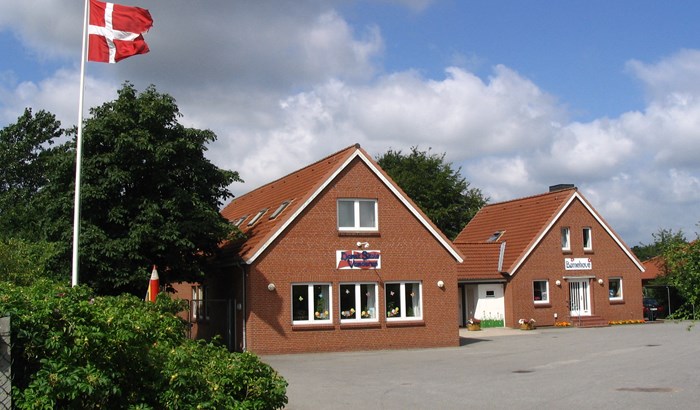
Education in Denmark starts early. Most children at the age of 6 months start attending their first form of child care and an introduction into the Danish education system.
No formal teaching is allowed until the age of 6 years, but the Danes believe strongly that being around other children and integrating is important.
So children in child care will be exposed to personal development skills, language skills, social skills, nature, movement and cultural values. This is regarded as a form of education in Denmark.
Education in Denmark - how to apply.
First thing to know is that you MUST have a CPR Number, before you can register your children in any form of education in Denmark or child care services.
Each kommune is responsible for placing children in the appropriate places.
You can find the rules on each kommune's website under børnepasning, pasning or skole.
Rules will vary from kommune to kommune, yet these are general guidelines which should serve you well.
Since children can enroll in child caring services at 6 months of age, most Danes register their children right after they are born to insure the best places. You should have your child register before their 4th month birthday.
Of course, if you have just arrived in Denmark, register as soon as you have your CPR number. There is usually a waiting list.
There is a "pasningsgaranti" in Denmark, which means all children are guaranteed a right to a place in a child care service until they are able to start school.
You have to go to your local kommune and register your child. At that time you can choose up to 3 child care services and will be put on the waiting list. The kommune will try to get you a place at one of your choices, but some places have long waiting lists.
When you can not get into a child care service, than the kommune will actually pay you to stay home and watch your own children or set you up with a child minder or nanny if necessary.
The government has said that waits should be no longer than 3 months and most people I have talked to have not waited any longer.
Child care is not free and depending on where you live you can expect to pay up to 3000 kroner per month per child.
There has been a dramatic increase in the number of privately run day cares and schools, especially in smaller communities. When kommunes decide to close them down, the inhabitants of the area will decide to start their own schools and daycares instead of having the children driven far away to attend school.
Types of Schools
The first form of education in Denmark, that your children will be exposed to is when they enter vuggesture.
The "vuggestue" is pronounced "vogue -ga- stew", which is for children ages 6 months to 3 years of age.
After that your child will move into a børnehave or kindergarten which is for children ages 3 to 6 years of age.
After the age of 6, children start attending "Folkeskole" in their local kommune. You can apply for a school outside your kommune.
There are 3 levels of schooling.
Grades 0-3 (where 0 is actually kindergarten and the children get a chance to integrate into a new school system)
Grades 4-6
Grades 7-9
Schools will vary greatly from what you find in America and the UK. Teaching is done a bit more loosely and in teams.
For example Grades 4-6 will be taught by a team of teachers who each have the freedom to choose their own textbooks, materials and methods of teaching. There are no official grades as you find in US schools. It is not until the 8th grade where grades are officially given and than in grade 9 the students take their final exams.
After final exams, students can choose to contiue their education for another 3 years and take their A-Levels ( studentereksamen) or go to a trade school /apprenticeship(ungdomsuddannelse).
After that you can continue to go to University or higher education. More information on higher education can be found at Study in Denmark.
After School Programs
Since most parents work to support a family there are options for afterschool care for children. Children go directly from their school to after school facilities.
These include:
Fritidshejem for Grades 1-4. Also known as SFO
Fritidsklub for Grades 5-6. Also know as a SFO-Klub
and finally the
Ungdomsklub for children in grades 7-9.
These places are usually open from when school lets out to about 5 pm. Some stay open a bit later, but the norm is between 5- 6 pm.
International Schools
If you wish to expand your choice of education in Denmark, check out the International Education in Denmark. There are lots of International schools throughout Denmark, tho most are found close to Copenhagen.
You can continue learning more about getting started in Denmark or more about everyday life as an expat.
|
|
|
If you found this page helpful, please give a google+ and or a facebook like at the top of the screen, so others can also find this information. Thank you.
Please feel free to comment on this subject
Do you have a helpful tip or comment on this subject that you would like to share? Please leave comments below.
What Other Visitors Have Said
Click below to see contributions from other visitors to this page...
Graphic design education in Denmark Not rated yet
Good day, I would like to move to Denmark to study/work and I have one question regarding this. Could you be so kind as to tell me, is there any school/university …
Location of CBS in Copenhagen Not rated yet
First off, this is a great site! I'm glad i've found it! I will be heading to Copenhagen Business School next semester (Autumn semester) as an exchange …
Chossing right danish school for my children. Not rated yet
HI there, you blog is so helpful and helps me stay sane as I am going to move to Copenhagen in two months and have no idea where to start. Right now my …
Getting started with schooling in Denmark Not rated yet
I am a 29 years old girl.i have studied dentistry and have worked for 1 year as dentist in Hungary. now i m learning danish to be able to work as dentist …
Going to school in Denmark Not rated yet
Dear Sir/Madam,
I am writing this letter to you because my school wants me to go on an internship. Since I want to do this in Denmark I searched on the …
Quality facemasks are in high demand and hard to find. We have found these quality masks here for only 14kr. Going fast so get yours today! Click Here.
Recent Articles


-
Home Furnishing Shops in Denmark
Feb 16, 24 11:10 AM
 There are many home furnishing shops in Denmark, yet not all have physical stores nor are they well known. To find the best prices ind quality, check out some of these shops
 -
Useful Danish Phrases
Oct 07, 21 07:28 AM
 Learning a few useful danish phrases or words can go a long way to making your stay or visit in Denmark more enjoyable.
 -
Aarhus Attractions
Oct 07, 21 07:08 AM
The number of Aarhus attractions may not be as big as Copenhagen, but there is still alot to see and do in this Danish city.

SBI!