Driving in Denmark
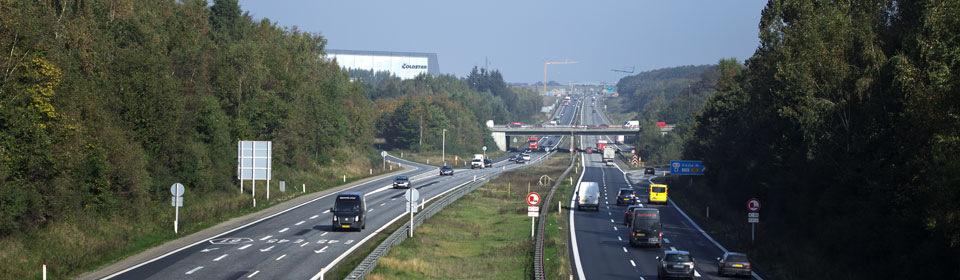
Driving in Denmark is not cheap and often it is not worth owing a car , when you have a good public transportation system or a bicycle can suffice. Below is some advice and information about car responsibility in Denmark and you can make your own informed decision.
If you wish to have a car in Denmark, weigh your costs to your actual needs. If you live and work in the city - NO WAY! It just wont pay - rent one if you need one or join a car share program.
Driving here is similiar to (almost) anywhere else in the world. You drive on the right side of the road and follow most of the same types of traffic laws. The major difference involves your interaction with other forms of traffic- especially cyclists.
Below are some things you will need to know when driving in Denmark.
Tips for driving in Denmark
1. When driving, you must ALWAYS be on the lookout for bicycles, pedestrians and mopeds.
Along most major roads there are bike paths, which are designed for bicycles and small mopeds/scooters. Since their paths are to the right of your lane, you must be aware when turning right in your car.
You DO NOT have the right of way. Motorists must always yield to bicycles, mopeds and pedestrians. If
you hit a cyclist, you are in SERIOUS trouble. You will find that in
the city there are often traffic lights for cars and another set for cyclists. But that is not always the case so care is necessary.
2. When you change lanes you must indicate or you will get fined 1000 kroner.
3. When driving in Denmark you must have your headlights on at all times - day and night. If you rent or buy a car in Denmark, it is standard on all cars that the lights turn on automatically when the engine is started. If you drive in from another country, remember to turn on your headlights - you will get fined 1000 kroner for not using them properly.
4. Denmark does have a few roundabouts, but they are far fewer than you find in other countries; for example, England. At a roundabout in Denmark, you yield to traffic coming from the left.
5. Know your speed limits! Speed limits are pretty straightforward. They are: 50kph in the city, 80kph outside the city and 110 - 130kph on the motorway. KPH is "kilometers per hour". The exception is when another speed is posted on the road. In cities it is common to find 70kph on the ring roads or other major thoroughfares through the city.
Some speed limits are not posted on signs in the conventional way, especially when coming to small towns and villages. If you come to a sign showing a cityscape (see below) that means that the speed limit is 50 km.
 entering 50 km speed limit zone
This is not obvious, since there is no mention of the speed on the sign. When you leave the village you should see a cityscape sign with a black diagonal line, which means that the speed limit is back to the normal limit.
Within the 2 cityscape signs you should drive 50km unless there is another sign saying you can go faster or slower. This is very confusing for new drivers in Denmark and it is a popular method for the police to catch speeders who are unaware.
 indicates end of 50km speed limit
Speed cameras are not as prevalent in Denmark as they are in Britain. In
some areas of Britain, you see one every 2 or 3 minutes, whereas, you
can be driving in Denmark all day and maybe only come across one or two. In Denmark they are harder to see, you are not warned
that there is a camera ahead and maps do not show you where they are.
If you travel the same route every day you will soon know if there is a
camera on your route.
More often traffic is monitored by traffic vans. If you travel by a van sitting on the side of the road and you see a bright flash - you just got caught on camera speeding and will receive a ticket in a few weeks time. And the fines in Denmark are very steep. See how much driving in Denmark traffic fines are here! Best way to avoid a fine is to drive within the limits and laws
Note from Simon: There is some places where it is 90 kph it will say on the signs. The signs that indicate that although it is 80 that is the speed limit there is most of the time a sign where it allow 90 kph.
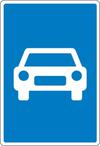
6. Learn your traffic signs. For more information on various traffic signs and road symbols check out traffic signs and road symbols. Just right click on the link to download. The signs start on page 7. You can use google translate to find out the meaning of each sign.
The meaning of each traffic sign is listed to the right of the sign and just above it in a grey bar. Something like this"Zone med lokal hastighedsbegrænsning". Put that into google translate and it will tell you that it means "zone with max speed limit". You be familiar with most of these signs when driving.
7. It is a common practice to change tires twice a year. In winter time you drive on winter tires and the rest of the year you drive on summer tires. It is not a law, but they claim that your driving is hampered if you use the wrong tires. I have never driven on winter tires and never had any problem. The secret is good driving. Yes, if you love to brake hard, drive fast and corner sharply, it is recommended to change your tires along with the seasons.
8. All passengers must wear seat belts when the car is moving. Children must be in car seats or appropriate seat belts. Bring a good car seat with you if planning on driving with your children.
9. It is illegal to use a car phone while driving in Denmark. At present you can use a handsfree, but if you are not paying attention, you may still be fined. Best is to stay off the phone while driving. Many cars today have Bluetooth systems in new cars, which is legal to use.
10. Make sure to have a valid driving license, the certificate of registration and proof of insurance with you when driving.
11. Make sure your tire/tyre thread depths are at least 1.6mm or again you get fined. I know I keep saying you get fined, but the police do not give warnings over here. Cut and dry - you get a fine!
12. If you towing a trailer the speed limits are max 70, except on the highways when it is 80.
13. Always give way to buses. If a bus indicates it is entering the flow of traffic from a bus lane, you have to give way. (note from Simon) Yellow busses (City busses) can spontaneously drive out from the bus lane into the traffic after picking up passengers they are allowed to do so because of their strict schedule, there is blue busses (Out side big city busses) they are not allowed to but be vary careful the blue bus drivers might have forgot that. I can not find that rule or law written anywhere, yet I stand behind my original statement.
14. Always pass on the left, passing or overtaking on the right is against the law and you will be fined. (note from Simon) It is true that it is illegal to passing or overtaking another person to the right, although there is a rule that says if another person does it in front of you then it is not illegal to follow them. I do not know that law and can not believe it is okay to break the law just because someone else does. I stand behind my original remark.
15. Watch out for parking signs. All cars in Denmark have a parking disc on their windows. When you park, make sure the disk says what time you parked. Just move the arrow to the correct time. May be free parking for a few hours, but if your disk does not note the correct time, you get a parking fine of 1000 DKK! You can get automatic parking discs that electronically set the time everytime you stop your engine. (note from Simon) When setting the parking disk always make sure that if lets say if the time is 1240 then you should set it to 1245. Always set it to the nearest fifteenth minute.
Also look for parking meters. In most major cities you will find meters and you have to display a ticket on your dash.
16. As you are driving in Denmark, you may notice that tailgating (driving very close to the car in front of you) is very popular, but it is illegal. The police do fine for it, so again, it should be obvious, but back off and drive friendly.
17. Finally and it should be obvious, but do not drink and drive or drive under the influence. It is unsafe, stupid and you will get fined. And you kill yourself or someone else!
18. If you cross the border to Germany, Sweden, etc. your car must have an EU license sticker and you need to carry your passport. If you are stopped by the police and you do not have those things - well you know what happens - yep a fine! (note from Simon) That you need to have an EU license sticker in order to cross the borders is completely wrong if you have a normal you can drive where every you want in the eu, the passports part is correct. I know this because i have driven in Germany many times with a none EU plated car and the police never stops me or fine me.
Response: Yes if you just cross the border to shop it is probably not a problem, yet if you drive through much of Europe the EU states that you need to have an EU sticker or plate. That is how I read the law. - Charlie
Drive SAFE and FRIENDLY!
The
police are not very tolerant of ignorance of the driving in Denmark
laws. Learn the rules and follow them or you could get fined if caught.
You will find lots of practical and helpful information. Explore more transportation options in Denmark
Learn more about importing your car to Denmark and if it is worth the expense.
Return to main transportation page.
|
|
|
If you found this page helpful, please give a google+ and or a facebook like at the top of the screen, so others can also find this information. Thank you.
Please feel free to comment on this subject
Do you have a helpful tip or comment on this subject that you would like to share? Please leave comments below.
What Other Visitors Have Said
Click below to see contributions from other visitors to this page...
Some corrections and additions for Driving in Denmark. 
For 5. There is some places where it is 90 kph it will say on the signs. The signs that indicate that although it is 80 that is the speed limit there …
Cycle lanes on roundabouts Not rated yet
We are already warned that cyclists in Denmark including surprisingly fast battery powered cycles and mopeds must always be given priority in pretty much …
Necro Not rated yet
First I made the driving school here and the instructor teached me that NEVER signal for changing lanes, just if you turn right/left. After, if you go …

Quality facemasks are in high demand and hard to find. We have found these quality masks here for only 14kr. Going fast so get yours today! Click Here.
Recent Articles


-
Home Furnishing Shops in Denmark
Feb 16, 24 11:10 AM
 There are many home furnishing shops in Denmark, yet not all have physical stores nor are they well known. To find the best prices ind quality, check out some of these shops
 -
Useful Danish Phrases
Oct 07, 21 07:28 AM
 Learning a few useful danish phrases or words can go a long way to making your stay or visit in Denmark more enjoyable.
 -
Aarhus Attractions
Oct 07, 21 07:08 AM
The number of Aarhus attractions may not be as big as Copenhagen, but there is still alot to see and do in this Danish city.

SBI!