Danish Government
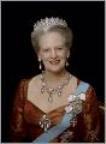
The Danish government consists of a constitutional monarchy, where Queen Margrethe II is the royal head of state. She has no ruling authority, since royal power was handed over to the parliament / Folketing in 1901 by the king. The head of the Folketing is the prime minister, who is Mette Frederiksen from the Social Democratic party.
Queen Margrethe holds the throne and is the official ruler of Denmark. Her position is mostly ceremonial, but her signature is required to pass new legislation. She has sat on the throne since 1972 and is a very beloved figure in Denmark. Rarely do you hear people saying anything negative about her. Her birthday is a very special day in Denmark and is celebrated throughout the land.
People swarm to Amalianborg Palace on her birthday (April 16th) and wave flags and greet the Queen. It's a very unique experience and something you should participate in if you get a chance. See the video below for an insight into the Royal Family.
Danish government is run by a single chamber parliament called the Folketing. The Prime Minister leads the government and the Prime Minister is Mette Frederiksen from the Social Democratic party.
The Danish Parliament has its seat at Christiansborg, which is located in the heart of Copenhagen.
The Danish government consists of 8 major political parties and they are aligned in two alliances: The Central Left Party and the Central Right Party.
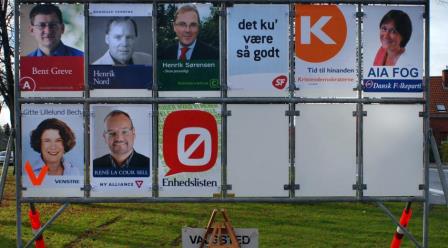
If you look at the above posters you will see a letter on each poster: A, B, C, F, I, K, O, V and Ø, which represent each party. See below for more info.
|
Central Left Party
|
Central Right Party
|
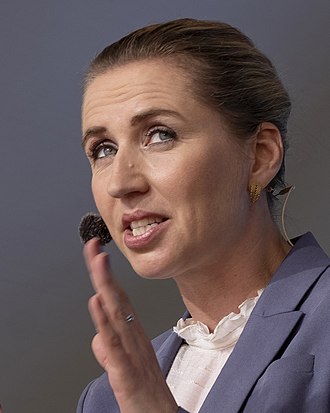
Since the Social Democrats have more seats, they are the ruling party. And the party with the majority of seats, which is the Social Democrats, their leader holds the office of Prime Minister.
The Social Democrats are now the leading party and hold the most power in the Folketing. Still most of parties do try to work together and make concessions with each other for the betterment of the Danish people.
The Danes are very active in politics, and the voting rate is quite high compared to countries like the US and Britain. The voting age is 18 and many young people are very active in politics.
It is not uncommon to find protesters in the streets, peaceful marches and banners being displayed trying to convey their political views or to make changes to the way the government is run. The Danes are very vocal in their political beliefs and Danes are expected to be politically active - which they are!
This is a just a general overview of the Danish system, but there is much more that you can learn about how the government works by checking out www.ft.dk.
Danish Government's Administration
The Danish government is broken down into 3 governing bodies, which each handle a different aspect of government.
- The Central government is generally responsible for education, employment, foreign affairs and taxes.
- The regional governments are more concerned with social service, health care and regional growth and development.
- Kommunes are the ones, which most people will be interacting with since they are the ones that are in charge of providing the social services, employment, schools and other services to the public.
You can learn more interesting things about Denmark here.
|
|
|
If you found this page helpful, please give a google+ and or a facebook like at the top of the screen, so others can also find this information. Thank you.
Please feel free to comment on this subject
Do you have a helpful tip or comment on this subject that you would like to share? Please leave comments below.
What Other Visitors Have Said
Click below to see contributions from other visitors to this page...
since 2015 Not rated yet
Since june 2015 there is a central right government led by Lars Løkke Rasmussen of the Venstre party (Liberals).

Quality facemasks are in high demand and hard to find. We have found these quality masks here for only 14kr. Going fast so get yours today! Click Here.
Recent Articles


-
Home Furnishing Shops in Denmark
Feb 16, 24 11:10 AM
 There are many home furnishing shops in Denmark, yet not all have physical stores nor are they well known. To find the best prices ind quality, check out some of these shops
 -
Useful Danish Phrases
Oct 07, 21 07:28 AM
 Learning a few useful danish phrases or words can go a long way to making your stay or visit in Denmark more enjoyable.
 -
Aarhus Attractions
Oct 07, 21 07:08 AM
The number of Aarhus attractions may not be as big as Copenhagen, but there is still alot to see and do in this Danish city.

SBI!